In the past few years, Archicad has become one of the most widely used tools among architects, engineers and design consultants.
One of the most common questions I receive from beginners is:
“What is Archicad and how is it different from AutoCAD or Revit?”
In this first lesson of the “Archicad Learning Roadmap – From Basic to Real Projects”, I’ll explain what Archicad actually is, and why you should learn it — even if you’ve never used BIM before.
What is Archicad?
Archicad is a BIM (Building Information Modeling) software developed by Graphisoft. It allows you to create 3D models and 2D drawings at the same time in a single platform.
This is the biggest difference compared to traditional CAD software.
📌 For example: when you place a Door in Archicad, it’s not just a 2D line – it is a building element that contains actual information such as size, material and technical data.
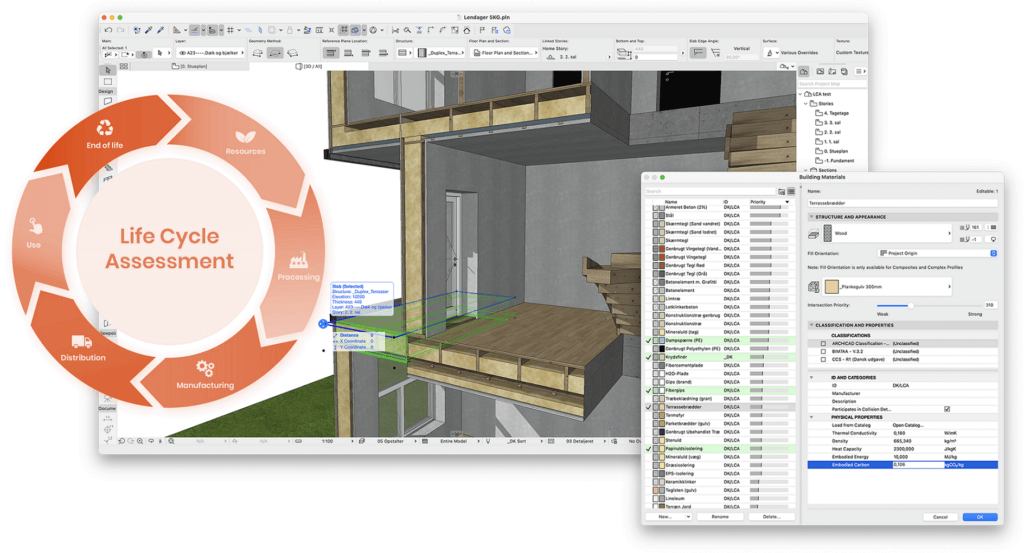
Most beginners don’t realize how powerful this is until they try. By using a BIM workflow, you can start with a very rough concept and gradually refine the model without having to redraw the entire project from scratch.
In real projects, this saves many hours compared to CAD.
Why should you learn Archicad?
Here are 4 strong reasons why I always recommend Archicad to students and young architects:
1. Draw once – use everywhere
From a single model, Archicad automatically generates floor plans, elevations and sections.
2. Directly usable in real projects
Today, many architecture firms in Vietnam and abroad work with Archicad.
If you learn the right roadmap, you can join real projects after 1-2 months.
3. Easier to learn than Revit
Archicad has a clean interface and the tools are well organized, which makes it very friendly for beginners.
4. Ideal for individuals and small teams
You don’t need a big team or complicated configuration. One person can manage the entire modeling and documentation process.

Another important point is that Archicad supports international standards such as IFC, so even if your client uses Revit or another BIM tool, you can still collaborate and exchange data.
In other words, learning Archicad does not limit you — it actually makes you more flexible in BIM workflows.
What is Archicad used for?
| Application | Description |
|---|---|
| Architectural Design | Create models and technical drawings |
| Residential Projects | House / villa design |
| Medium-Large Buildings | Offices, schools, mixed-use projects |
| BIM Coordination | Export IFC / collaborate with Revit and Navisworks |
In short, if you are in the Architecture – Construction industry, Archicad is a very good skill to have.
Even if you’re still a student, learning Archicad early will make your portfolio stand out and help you find internships or freelance work faster. Many small firms prefer to hire someone who already knows Archicad instead of training from scratch.
Is Archicad difficult to learn?
Actually, it’s not difficult – as long as you follow the correct learning order.
The biggest mistake is jumping directly into complex projects or random YouTube tutorials.
Here is the learning order I recommend (and also the structure of this series):
Interface → Basic Tools → Simple Model → Advanced Tools → Documentation
In my own experience, people who follow this order usually become productive after 2–3 weeks and can finish a full residential project after 6–8 weeks — even without any previous BIM experience.
Learning Path in this Series
We will go through 4 phases:
Interface and initial setup
Basic tools and simple floor plan
3D model + sections/elevations
Documentation and PDF / DWG export
In the next lesson (Lesson 2), I will show you how to download and install the latest version of Archicad directly from Graphisoft.
If you find this helpful, save this page and follow the next lessons in the Archicad Learning Roadmap – From Basic to Advanced.
If you have any questions, feel free to leave a comment – I’ll answer using real experience from practice.